Prenatal care for undocumented patients: clinic options
If you are pregnant and do not have legal status in the United States, the federal government has made one thing clear since 1996: routine prenatal care is not a benefit you can usually access through standard federally funded health insurance.
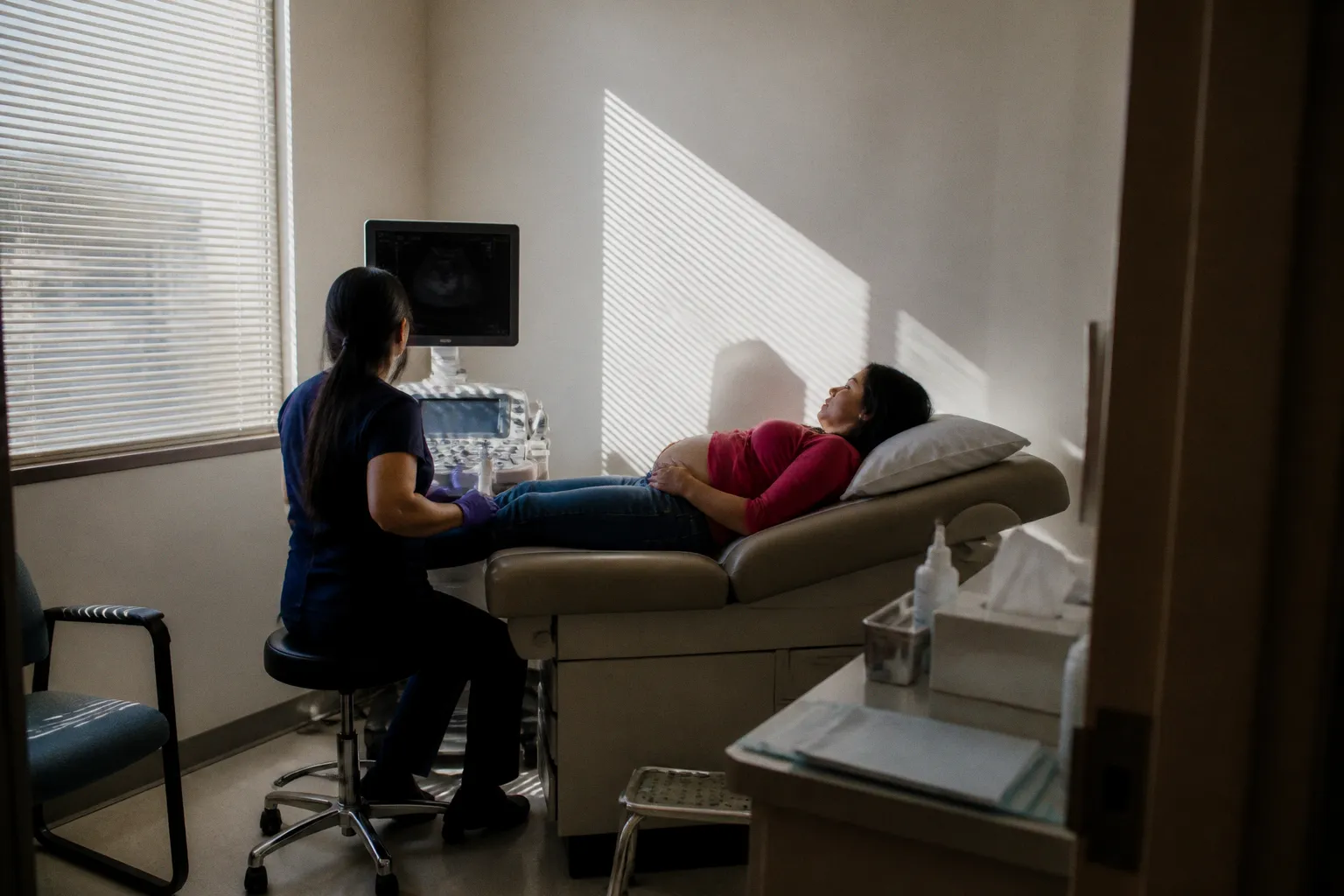
The Personal Responsibility and Work Opportunity Reconciliation Act (PRWORA) generally bars undocumented immigrants from enrolling in regular federally funded Medicaid, Medicare, and Children’s Health Insurance Program (CHIP) coverage. That framework has remained in place for decades, and it is the starting point for understanding what prenatal coverage may look like for patients without immigration status.
But PRWORA is the floor, not the ceiling. Federal policymakers drew a sharp line around routine public insurance coverage and then left several routes open around it: emergency care, community health centers, and state-funded pregnancy programs. The result is a patchwork that is genuinely available if you know where to look and genuinely confusing if you do not. Finding undocumented immigrant prenatal care options often means combining more than one source of care rather than finding a single insurance card that covers everything.
A federal exclusion does not have to mean no care. It usually means a different door than the one your insured neighbors walk through.
What PRWORA actually blocks — and what it does not
On the prenatal-care question, PRWORA generally prevents undocumented immigrants from qualifying for the standard federally funded Medicaid coverage available to eligible pregnant people. Regular CHIP coverage is also restricted at the federal level for undocumented immigrants. Medicare is generally unavailable as well, although it is less relevant to most pregnancy-related coverage questions because Medicare eligibility is usually tied to age or particular disability-related circumstances.
That restriction applies to insurance eligibility. It does not make prenatal care illegal to seek, prevent an undocumented patient from visiting a clinic, restrict where a pregnant person may give birth, or require a hospital or health center to turn someone away simply because they cannot show proof of immigration status.
It also does not erase the separate rules that apply to emergency departments. The Emergency Medical Treatment and Active Labor Act, commonly called EMTALA, requires participating hospitals to provide an appropriate medical screening examination when a person presents to the emergency department with a possible emergency medical condition. If an emergency condition is found, the hospital must provide stabilizing treatment within its capability or arrange an appropriate transfer. In pregnancy, that protection includes active labor, but it is not limited to labor: it can also apply to other emergency medical conditions, such as serious bleeding, severe hypertension, or another condition requiring emergency evaluation and stabilization.
The distinction matters. EMTALA is not a substitute for scheduled prenatal care, but it is broader than a guarantee that begins only when contractions become regular. A pregnant patient does not have to wait until delivery is imminent for emergency-department protections to become relevant.
PRWORA also does not prevent states from creating their own pregnancy coverage programs. Some states use state funds to cover prenatal services for income-eligible pregnant patients regardless of immigration status. Others use an available CHIP pathway that treats the unborn child as the beneficiary for purposes of pregnancy-related coverage. These programs exist because states have chosen to fill part of the gap left by federal eligibility rules.
The state where you live is therefore one of the most important facts in the entire coverage question. Two pregnant patients with the same income and the same lack of immigration status may face very different options simply because they live across a state line.
Federally Qualified Health Centers: the sliding-scale safety net
For an undocumented pregnant patient anywhere in the country, a Federally Qualified Health Center, or FQHC, is often the most practical first door. FQHCs are community health centers that receive federal support through the Health Center Program and are required to serve people in their service areas regardless of insurance status or ability to pay. They are not the same as Medicaid, and visiting one does not require enrolling in a federal insurance program.
FQHCs use a sliding-fee structure based on income and family size. The exact fee is set by the individual health center, so no clinic can promise the same price as another. A patient with no income may qualify for services at no charge or for a very low fee, but the center will usually need to document the household circumstances under its own policy.
That documentation does not necessarily mean immigration documents. The clinic may ask for proof of income, a tax document, a pay stub, a benefits statement, or a written explanation of no income. Some centers can accept a self-attestation when a patient has no formal employment or cannot obtain conventional paperwork. The right question is not whether you have a Social Security number. It is what the clinic requires to determine eligibility for its sliding-fee schedule.
The prenatal services available at an FQHC vary, but many centers can provide a substantial portion of routine pregnancy care:
- pregnancy confirmation and an initial health assessment;
- prenatal examinations and blood-pressure monitoring;
- routine laboratory testing;
- screening for conditions such as gestational diabetes at the appropriate point in pregnancy;
- referrals for ultrasounds, specialist care, or higher-risk pregnancy services;
- care coordination with a hospital or obstetric provider; and
- postpartum follow-up.
Not every FQHC provides every service on-site. Some operate prenatal programs with physicians, nurse practitioners, or midwives. Others provide primary care and make formal referrals to a hospital clinic, obstetric practice, or community partner. The center may also have an enrollment specialist who can screen you for state-funded pregnancy coverage even when you do not qualify for regular Medicaid.
Most FQHCs do not deliver babies. They are generally outpatient facilities, so labor and delivery will usually take place at a hospital. That does not make the FQHC option incomplete. It means the pregnancy is divided between outpatient prenatal care and hospital-based delivery, with the clinic helping coordinate the transition.
Title X clinics and early referrals
Title X clinics are another possible entry point. Title X is a federal family-planning program, and participating clinics commonly provide pregnancy testing, reproductive health services, counseling, and referrals regardless of immigration status. Some clinics may provide early prenatal services or laboratory work, while others focus on confirming the pregnancy and connecting the patient with a prenatal provider.
Title X sites differ considerably. A clinic that offers pregnancy testing may not have an obstetric team. A clinic that has a nurse practitioner may be able to begin the assessment but still refer the patient elsewhere for continuing care. When calling, ask what the clinic does directly and what it refers out.
In communities where both an FQHC and a Title X clinic operate, the Title X site may be the faster place to confirm a pregnancy and receive an initial referral. The FQHC may then become the longer-term source of prenatal visits and sliding-scale care. There is no requirement to use only one system, and a referral does not obligate you to accept care at a particular facility.
To find an FQHC, use the Health Resources and Services Administration’s health-center directory or contact a local community health organization. State primary care associations often maintain regional information as well. When you call, ask:
- whether the center provides prenatal care directly;
- whether it accepts patients without insurance or immigration documents;
- how its sliding-fee schedule works at your household income;
- which documents it accepts when there is no formal income;
- whether interpretation is available in your preferred language;
- whether the center can help with state pregnancy-coverage applications; and
- which hospital it uses for labor and delivery.
Those questions turn a general inquiry into a workable care plan. They also help you avoid assuming that every health center offers the same prenatal services.
State-level coverage: the CHIP “Unborn Child” pathway
Twenty-four states plus the District of Columbia have developed publicly funded prenatal coverage for some income-eligible pregnant patients regardless of immigration status. The programs are not identical. Some rely on state-only funds. Others use a federal CHIP option commonly described as CHIP From-Conception-to-End-of-Pregnancy, or FCEP, and sometimes referred to as the “Unborn Child” option.
Under this pathway, the state treats the unborn child as the covered beneficiary for the duration of the pregnancy. The approach allows a state to use CHIP funding for pregnancy-related services even when the pregnant patient would not qualify for regular Medicaid because of immigration status. The care is provided to protect the health of the pregnancy and the future child, but the legal structure is different from ordinary Medicaid coverage for the pregnant person.
Where this option is available and the patient meets the state’s income requirements, coverage may include prenatal visits, laboratory services, imaging, care for pregnancy complications, and labor and delivery through participating providers. The scope of coverage, enrollment rules, and treatment of postpartum care differ by state. Coverage for the infant after birth is also a separate question and should be addressed before delivery whenever possible.
The phrase “Unborn Child” can make the program sound more uniform than it is. In practice, states decide how to administer the pathway, which services are included, which providers participate, and what documentation is required. A state may have a broad pregnancy program, a narrower program, or a separate state-funded option that does not use FCEP at all.
Coverage is more uneven in states without this pathway. Some states use state-only dollars to create similar prenatal programs. Some counties or cities support limited services for uninsured pregnant residents. Other states offer no comprehensive public coverage for undocumented patients, leaving people to combine community health center care, charitable programs, private self-pay arrangements, and emergency coverage for urgent hospital services.
The question to ask a state Medicaid agency, FQHC enrollment specialist, or trusted community health navigator is precise: does the state cover prenatal care for income-eligible pregnant patients regardless of immigration status? If the answer is yes, ask what the program is called, whether it covers delivery, whether the provider or hospital must participate, and whether postpartum or newborn coverage requires a separate application.
Do not assume that a missing Social Security number ends the conversation. Some programs do not require one from the pregnant patient, although they may require proof of state residence, household income, pregnancy, or identity. Requirements vary, and the application process can be difficult to interpret from a website alone. An enrollment specialist can explain which documents are actually necessary and which are not.
Coverage questions worth settling early
Before relying on a state program, confirm several points:
- whether the program covers only prenatal visits or also labor and delivery;
- whether ultrasounds, laboratory work, and specialist referrals are included;
- whether there is a list of participating hospitals;
- whether the application can be filed through the clinic;
- whether eligibility begins on the application date or another date;
- whether the program covers treatment of pregnancy complications;
- whether postpartum care is included or requires another route; and
- how to apply for coverage for the baby after birth.
These details determine whether a program is a complete source of pregnancy coverage or only one part of the plan.
Hospitals and EMTALA: emergency labor and emergency medical conditions
When an undocumented pregnant patient goes into active labor or arrives at a hospital with another emergency medical condition, EMTALA applies to the emergency-department encounter. The Emergency Medical Treatment and Active Labor Act requires hospitals that participate in Medicare to provide an appropriate medical screening examination to people who come to the emergency department seeking care for a possible emergency condition. A hospital may not refuse the screening examination because a patient is uninsured, cannot pay immediately, or lacks lawful immigration status.
If the examination identifies an emergency medical condition, the hospital must provide stabilizing treatment within its capability or arrange an appropriate transfer. For a patient in active labor, the hospital must provide the care necessary to stabilize the patient and the newborn, subject to the law’s requirements. For a patient with a different emergency condition, such as severe bleeding or a dangerous pregnancy-related complication, the same basic emergency protections can apply even when the patient is not in labor.
This is the point that is often misstated: EMTALA does not begin only at the moment labor starts. It covers active labor and other emergency medical conditions. At the same time, it does not require a hospital to provide every form of routine prenatal care on demand, and it does not turn an emergency-department visit into comprehensive insurance coverage for the rest of the pregnancy.
The financial question is separate. EMTALA governs access to emergency screening and stabilizing treatment; it does not erase the bill. A patient may later receive a hospital invoice, qualify for Emergency Medicaid, receive financial assistance, or negotiate with the hospital’s billing department. Emergency Medicaid is designed to cover emergency services for certain patients who meet Medicaid’s income and other eligibility rules but are excluded from full Medicaid because of immigration status. It is not a routine prenatal insurance program.
In many states, emergency pregnancy coverage can be used for labor and delivery or for serious pregnancy-related complications. The exact process varies. Hospitals may have financial counselors who help determine whether an Emergency Medicaid application can be filed and what supporting documents are needed. A patient should ask about this before discharge if possible, or contact the hospital’s financial-assistance office afterward.
The emergency route is an essential protection, but it is not a sensible primary prenatal-care plan. It guarantees access to emergency evaluation and stabilization; it does not provide the continuity that comes from regular visits, screening, referrals, and early treatment. Those services are what FQHCs, state programs, and other prenatal providers are intended to supply.
EMTALA is broader than a labor guarantee: it protects emergency evaluation and stabilization for active labor and other emergency medical conditions. FQHCs and state coverage are what make the months before an emergency more manageable.
Putting the options together
For an undocumented pregnant patient, prenatal care is often assembled from several routes rather than secured through one program. The following comparison shows how the main options fit together.
| Route | What it may cover | Where it is available | Cost or billing issue |
|---|---|---|---|
| FQHC sliding-scale prenatal care | Routine prenatal visits, testing, care coordination, and sometimes postpartum follow-up | Community health centers across the country | Fee is based on income and household size; patients with no income may qualify for very low-cost or no-cost care |
| State-funded prenatal coverage | Prenatal visits, testing, pregnancy-related treatment, and sometimes labor and delivery | States with state-only programs or CHIP FCEP-style coverage | Usually limited to patients who meet state income and other eligibility rules |
| Title X clinic | Pregnancy testing, counseling, early services, and referrals; offerings vary | Participating family-planning clinics nationwide | Sliding-scale or low-cost services may be available |
| Hospital care under EMTALA | Emergency screening and stabilizing treatment, including active labor and other emergency conditions | Medicare-participating hospitals | Care may be billed; Emergency Medicaid or hospital assistance may help with eligible services |
| Private obstetric practice or midwife | Services determined by the provider and contract | Practices that accept uninsured or self-pay patients | Out-of-pocket prices and payment plans vary widely |
A practical route through the system usually looks like this:
1. Confirm the pregnancy and estimate gestational age. Earlier care gives the clinic more time to schedule testing, identify complications, and apply for any available coverage. If you have pain, heavy bleeding, fainting, severe headache, trouble breathing, or another urgent symptom, seek emergency care rather than waiting for a routine appointment.
2. Call an FQHC or community clinic. Ask directly whether it offers prenatal care to uninsured patients and how its sliding-fee schedule works. If the first center does not provide prenatal services, ask for a referral instead of starting the search over.
3. Ask about state coverage using the full eligibility question. Do not ask only whether the clinic accepts Medicaid. Ask whether the state has prenatal coverage for income-eligible pregnant patients regardless of immigration status, including CHIP FCEP or a state-funded equivalent.
4. Ask which documents are needed. Clarify what the clinic or state agency accepts as proof of income, residence, identity, and pregnancy. If you lack formal pay records or have irregular work, explain that at the beginning. The clinic may have a process for documenting variable or zero income.
5. Use an enrollment specialist or community navigator. FQHCs, immigrant-serving organizations, public health departments, and some hospitals employ people who understand local programs. They can often distinguish between a program that covers office visits and one that also covers delivery.
6. Schedule routine prenatal care even while an application is pending. Waiting for a coverage decision should not automatically mean waiting for the first clinical appointment. Ask what the initial visit will cost under the sliding scale and whether the clinic can arrange laboratory work or imaging at a reduced rate.
7. Plan the hospital route before labor. Ask which hospital the clinic usually works with, whether a state program requires a participating facility, and what to do if an emergency occurs outside the clinic’s hours. Keep the hospital’s address and phone number accessible. In an emergency, do not delay care while trying to resolve the billing question.
Two practical points come up repeatedly. First, a sliding-scale fee is not the same as a fixed national price. It is determined locally, so ask for the clinic’s policy rather than relying on a general promise that care is free. Second, community organizations may know more about the local patchwork than a national directory does. They may know which clinic has bilingual staff, which hospital has a financial-assistance office, and which state application forms create the most confusion.
Where the system still falls short
It would be a mistake to describe this patchwork as a solution. It is a series of workarounds. The federal exclusion under PRWORA is the structural reason an undocumented pregnant patient may have to navigate sliding-scale fees, state-by-state eligibility rules, separate applications, and emergency-only hospital protections in the first place.
The states that offer FCEP-style or state-funded programs have chosen to fill part of that gap, but the availability and scope of those programs remain uneven. Even where coverage exists, a patient may face provider shortages, language barriers, transportation problems, long waits, or difficulty finding a hospital that accepts the program. Eligibility may also change after delivery, leaving postpartum care to be arranged through another clinic or funding source.
EMTALA is real and important, but it should be described accurately. It protects a patient who presents with active labor or another emergency medical condition. It does not begin only when labor starts, and it does not promise a full schedule of prenatal visits. It protects the emergency-department door; it does not build the path leading to that door.
That distinction is not academic. Regular prenatal care can identify high blood pressure, diabetes, anemia, infections, fetal growth concerns, and other conditions before they become emergencies. A patient who has access only to emergency care is being offered protection at the most expensive and least flexible point in the pregnancy. The better route is to establish routine care early and keep the emergency option available for situations that actually require it.
For some patients, the workable plan will be a state pregnancy program that covers prenatal visits and delivery. For others, it will be an FQHC’s sliding-scale prenatal care combined with hospital financial assistance or Emergency Medicaid for eligible emergency services. Another patient may use a Title X clinic for confirmation and referral, then receive care at a community health center. None of these arrangements is identical, and none should be assumed without asking the provider to explain its rules.
If you are trying to arrange your next appointment, start with an FQHC or a community health organization near you. Ask what the first visit will cost, whether prenatal care is available on-site, which state programs might apply, and where delivery would take place. That call may not solve every coverage problem, but it can turn an opaque system into a sequence of concrete decisions. Everything else builds from there.