Maternal health outcomes: community clinics versus hospital systems
The question is not simply whether community clinics or hospitals deliver better maternal health outcomes.
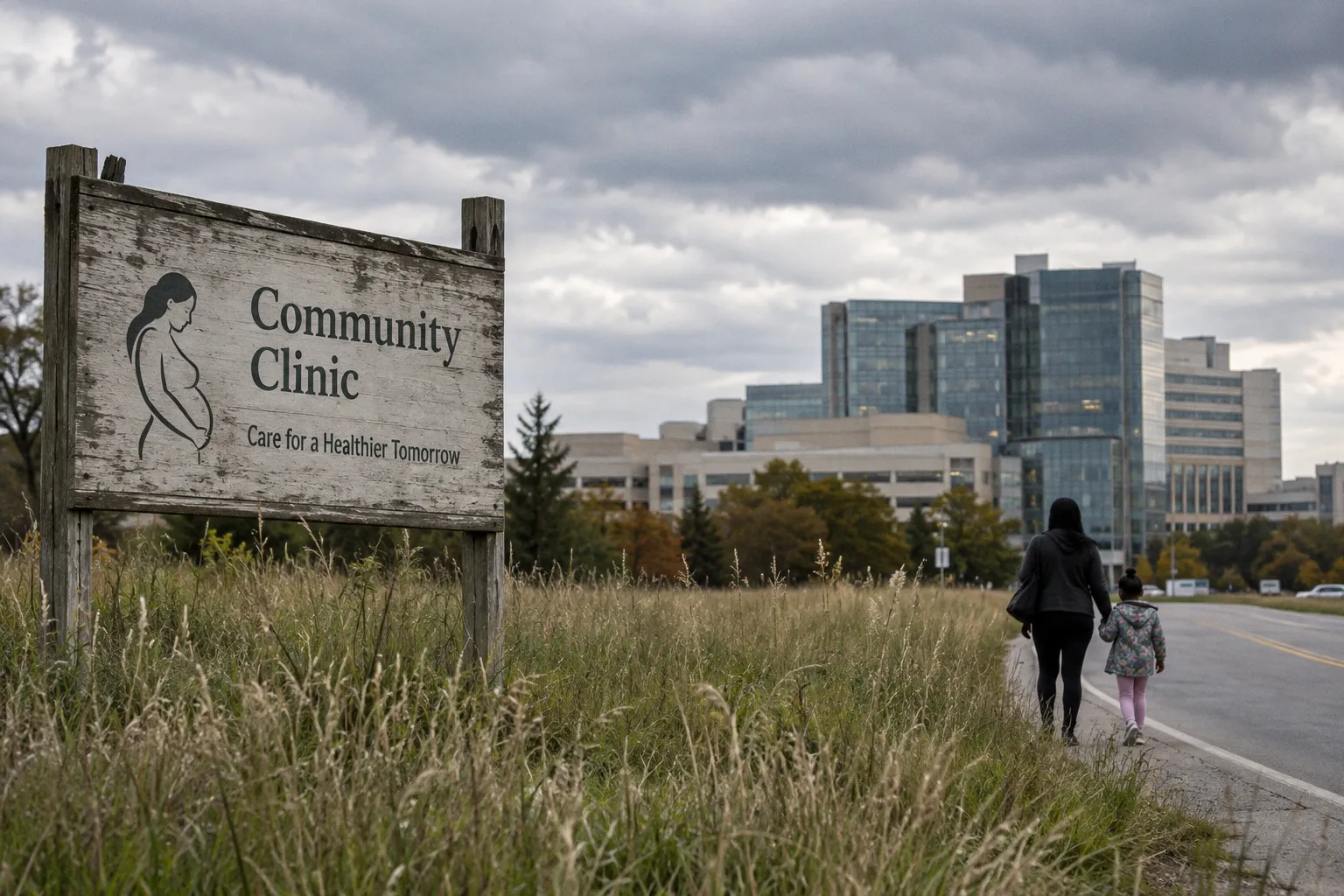
For many patients, especially those living in low-income communities or areas with few maternity services, the more urgent question is whether they can reach consistent prenatal care at all—and whether that care connects to emergency and specialty services when complications arise.
The comparison is especially consequential in the United States, where about 700 women die each year from pregnancy or delivery complications and more than 50,000 experience severe maternal morbidity. Black women face maternal mortality rates three to four times higher than White women. At the same time, 217 hospital obstetric units closed between 2011 and early 2023, adding pressure to communities already dealing with long travel distances, limited transportation, staffing shortages, and uneven insurance coverage.
Community health centers and hospital systems occupy different parts of the maternity-care map. One is often closer, more affordable, and better positioned to provide continuous primary and preventive care. The other has the operating rooms, intensive care capacity, blood banks, specialists, and neonatal services required when pregnancy or delivery becomes medically complex. The strongest care pathway does not treat them as interchangeable. It connects them.
The growing crisis of maternity care deserts
Hospital obstetric closures are not just a story about fewer delivery rooms. They reshape the entire route into care.
When a local obstetric unit disappears, a pregnant patient may need to travel farther for an initial evaluation, a routine ultrasound, a specialist appointment, or delivery itself. The burden is not evenly distributed. A person with reliable transportation, paid leave, flexible work, and access to childcare may be able to absorb a long trip. Someone working hourly shifts, relying on public transportation, or caring for other children may postpone appointments or miss them altogether.
That is how a shortage of delivery capacity becomes a prenatal-care problem.
Hospital systems generally remain the central setting for labor and delivery, particularly for patients who may need cesarean surgery, blood products, anesthesia, maternal-fetal medicine, or neonatal intensive care. But hospitals are not always the most accessible entry point into care. Emergency departments can assess urgent symptoms, yet they are not designed to replace longitudinal prenatal care. Large systems may also be difficult to navigate when appointments are scheduled across different locations or when insurance networks change during pregnancy.
Community health centers can fill part of this access gap because they are designed to serve patients regardless of their ability to pay and often operate in medically underserved areas. They may provide primary care, pregnancy testing, contraception, behavioral health services, cancer screening, and referrals under one local roof. Their value is not limited to the exam room. A nearby clinic may be able to help a patient address transportation, insurance enrollment, language access, medication affordability, or housing instability—factors that can directly affect whether prenatal care is possible.
Still, the national network is uneven. In a retrospective study of U.S. community health centers covering 2018 and 2019, 41% provided longitudinal prenatal care, 13% provided occasional prenatal care, and 45% provided no prenatal care. The label “community clinic” therefore does not guarantee that pregnancy care is available on site. Patients may receive pregnancy confirmation and referral support locally, while traveling elsewhere for prenatal appointments or delivery.
A clinic can be geographically close and still be only one link in the maternity-care chain. The real measure is whether that link leads somewhere reliably.
What community health centers do well
Community-based care is often strongest before a crisis develops. Its advantage is continuity: the same organization may know a patient’s medical history, social circumstances, medications, and prior experiences with the healthcare system.
That continuity matters during pregnancy because many risks are not isolated obstetric events. Hypertension, diabetes, depression, substance use, anemia, chronic pain, and intimate partner violence can affect pregnancy and postpartum recovery. A primary-care team that has already established trust may identify these concerns earlier than a patient who enters the system only through an emergency department.
The benefits of community-based prenatal care commonly include:
- Lower practical barriers. A local clinic may be easier to reach than a hospital campus located in another county. Some centers offer evening hours, interpretation, transportation assistance, or help with insurance and public benefits.
- More integrated services. Primary care, reproductive healthcare, behavioral health, and social-service navigation may be coordinated through the same center.
- Continuity beyond delivery. Community health centers can continue managing blood pressure, diabetes, contraception, depression, and other health needs after the six-week postpartum period.
- Greater familiarity with local communities. Staff may understand neighborhood-specific barriers, including limited public transit, immigration-related concerns, housing insecurity, or a shortage of nearby pharmacies.
- Potentially stronger preventive reach. In 2023, community health centers provided 4.3 million cervical cancer screenings and 2 million breast cancer screenings to low-income women. Those services illustrate the broader preventive role these centers can play, even when they do not provide full maternity services.
- A setting for culturally responsive care. Patients may be more likely to disclose concerns when communication is available in their preferred language and when staff understand the cultural context in which care decisions are made.
These strengths should not be reduced to a claim that community clinics are automatically more compassionate or that hospitals are inherently impersonal. The meaningful distinction is operational. Community health centers are often built around access and continuity; hospital systems are built around escalation, specialization, and acute treatment. Patient experience depends on whether both functions are available and coordinated.
The evidence also points to an important outcome distinction. According to the National Association of Community Health Centers, local community clinics achieve lower rates of low birthweight than the national average. That finding supports the promise of community-based models, but it does not establish that every clinic produces the same results or that a clinic can independently manage every pregnancy. Outcomes are shaped by the population served, the services available, referral relationships, local hospital capacity, and the broader conditions in which patients live.
A comparison that reflects how care actually works
| Care need | Community health center | Hospital system |
|---|---|---|
| Pregnancy testing and early entry into care | Often accessible through primary or reproductive healthcare; may provide counseling and referrals | Available through outpatient clinics or emergency departments, but emergency care is not a substitute for longitudinal prenatal care |
| Routine prenatal visits | Available at some centers, but not nationally universal; 45% of CHCs in the 2018–2019 study provided no prenatal care | Usually available through obstetric practices, though appointments may be difficult to reach or schedule |
| Management of social and preventive needs | Often integrates primary care, behavioral health, screenings, benefits navigation, and community referrals | May offer extensive services, but they can be distributed across departments and locations |
| High-risk pregnancy care | Usually depends on referral to an obstetrician, maternal-fetal medicine specialist, or hospital | Better equipped for specialist consultation, advanced imaging, surgery, blood products, and intensive monitoring |
| Labor and delivery | Many centers do not function as delivery hospitals and should not be treated as substitutes for hospital obstetric units | Main setting for delivery, emergency surgery, anesthesia, neonatal care, and management of severe complications |
| Postpartum follow-up | Can support ongoing primary care, mental health, contraception, and chronic disease management close to home | May provide specialized postpartum care, but patients can be lost between hospital discharge and community follow-up |
| Cost and coverage navigation | Often designed to serve uninsured or underinsured patients and may use sliding-fee structures | Billing and insurance systems can be more complex, particularly across separate clinicians and facilities |
The table is less a contest than a map. A patient may begin at a community health center, receive routine care through an affiliated obstetric practice, deliver at a hospital, and return to the community clinic for postpartum and primary care. That is not fragmented by definition. It becomes fragmented when no one explains the handoffs or takes responsibility for follow-up.
Why racial mortality gaps persist
The maternal mortality gap between Black and White women cannot be explained by income alone, individual behavior, or whether a patient chooses a clinic or hospital. Structural racism, unequal treatment, differences in insurance coverage, residential segregation, chronic stress, exposure to environmental risks, and uneven access to high-quality care all shape outcomes.
A community clinic may reduce some barriers, but it cannot erase the conditions that produce them. A patient can receive respectful prenatal care and still face a long trip to the nearest delivery hospital. A hospital can have advanced technology and still fail to recognize a patient’s symptoms, dismiss pain, or delay treatment. Maternal safety depends on both clinical resources and the quality of communication around them.
The racial disparities are also present across the care continuum:
1. Before pregnancy. Chronic conditions such as hypertension and diabetes may be diagnosed late or poorly controlled when primary care is difficult to access.
2. During prenatal care. Missed appointments may reflect transportation, work, childcare, or insurance barriers rather than a lack of concern about the pregnancy.
3. During labor. Rapid changes in blood pressure, bleeding, infection, or other complications require teams that can identify deterioration and act quickly.
4. After delivery. The highest-risk period does not end when the patient leaves the hospital. Postpartum hypertension, infection, cardiomyopathy, depression, and blood clots can emerge after discharge.
5. Across the medical relationship. Patients who have experienced discrimination may reasonably hesitate to seek help again, particularly when previous complaints were minimized.
Culturally competent maternity care is therefore more than matching a patient with a clinician of the same race or background, although representation can matter. It includes trained interpreters rather than relying on family members, informed consent that is explained in plain language, recognition of different family structures, respectful treatment of LGBTQ patients, and a willingness to take pain and warning signs seriously.
For LGBTQ patients, the route through care can add another layer of difficulty. A transgender man or nonbinary patient may encounter intake forms, waiting rooms, or clinical assumptions that do not reflect their identity or reproductive needs. A same-sex couple may have to repeatedly explain who is involved in decision-making and family support. Community clinics that offer inclusive primary and reproductive care can be valuable entry points, but inclusive practice must also continue at the hospital where delivery or emergency treatment occurs.
Access is not achieved when a patient is technically allowed into the system. It is achieved when the system is reachable, understandable, respectful, and capable of responding before a manageable problem becomes an emergency.
The limits of community-based models
The promise of community care becomes misleading when it is treated as a replacement for hospital capacity.
Most community health centers are not designed to perform emergency cesarean deliveries, manage major obstetric hemorrhage, provide continuous invasive monitoring, or care for critically ill newborns. They may identify risk, provide prenatal services, coordinate referrals, and support recovery. High-risk delivery emergencies still require an integrated hospital system with surgical, anesthesia, laboratory, transfusion, and neonatal capabilities.
That limitation is not a failure of the community-clinic model. It is a reason to evaluate the entire network rather than one facility in isolation.
A clinic serving a rural or low-income area may be highly effective at early prenatal engagement but struggle if its referral hospital is hours away, has no available obstetric beds, or cannot provide timely specialist appointments. Conversely, a major hospital may offer excellent emergency care but have weak mechanisms for connecting uninsured patients to prenatal care before admission or postpartum care after discharge.
The handoff between settings is where many practical problems appear:
- The referral is placed, but the patient never receives an appointment date.
- Medical records do not arrive before the first specialist visit.
- A patient does not know which symptoms require calling the clinic and which require emergency care.
- Hospital discharge instructions assume access to a pharmacy, transportation, a blood-pressure cuff, or paid time off.
- The community provider is not informed that the patient delivered, developed a complication, or needs earlier postpartum review.
- Insurance authorization delays a consultation even when the clinical concern is urgent.
These are coordination failures, not merely patient-compliance problems. A system that relies on patients to navigate every transition on their own will predictably underserve those with the fewest resources.
Hospitals also face structural constraints. The closure of 217 obstetric units between 2011 and early 2023 was driven by declining birthrates, staffing shortages, rising costs, and dependence on lower Medicaid reimbursement rates. Even a hospital that remains open may reduce hours, lose specialists, or struggle to maintain around-the-clock coverage. The presence of a hospital building does not necessarily mean that every maternity service is available there.
What an integrated route looks like
The most useful comparison is not “community clinic versus hospital,” but “isolated service versus connected system.” Better maternal health outcomes depend on a pathway in which each setting does the work it is equipped to do and communicates with the next one.
For a patient seeking care, the route may look like this:
Start where entry is easiest
A community health center, primary-care office, reproductive-health clinic, or public health program may be the fastest way to confirm a pregnancy and establish the first appointment. If the site does not provide prenatal care, the patient should still be able to leave with a concrete referral rather than a general instruction to call around.
The first visit should also be an opportunity to identify medications, chronic conditions, mental-health needs, safety concerns, insurance barriers, and transportation problems. These issues affect whether the rest of the care plan is realistic.
Clarify who provides prenatal care
Patients should know whether the community clinic will provide longitudinal prenatal visits, occasional visits, or only referral and support. Those are different models. A clinic that provides pregnancy testing and referrals may be an excellent access point without being the place where routine prenatal care occurs.
The practical questions are straightforward:
- Who will schedule the next prenatal appointment?
- Where will routine visits take place?
- Which hospital is connected to the obstetric practice?
- Who should be called after hours?
- How will records and test results move between providers?
- What happens if transportation or insurance disrupts an appointment?
This is not administrative trivia. Unclear responsibility is a clinical risk when pregnancy complications can develop between visits.
Match risk to the right level of care
Many pregnancies can be managed through routine prenatal care with appropriate screening and referral. Others require maternal-fetal medicine, cardiology, endocrinology, genetics, or hospital-based monitoring. A community clinic should be able to recognize when a patient needs escalation, and the hospital system should make that escalation feasible.
No care model can promise that every complication will be prevented. The goal is to reduce avoidable delays: delays in recognizing a warning sign, obtaining a specialist appointment, reaching a delivery site, or receiving treatment once there.
Build postpartum care before discharge
Postpartum planning should not depend on a patient remembering everything while exhausted, in pain, or caring for a newborn. The plan should identify the location and timing of follow-up, medication access, blood-pressure monitoring when needed, mental-health support, contraception counseling, and a direct contact for concerns.
Community health centers are particularly important at this stage because they can continue care after the hospital episode ends. They may manage conditions that predated pregnancy, address new chronic disease, provide contraception, and connect patients to behavioral health or social services. The hospital remains essential for complications that require acute evaluation, but recovery often unfolds at home and in the community.
Measuring outcomes beyond the delivery room
Maternal health outcomes should not be judged only by whether a patient survived delivery or whether a baby was born at term. Those measures matter, but they miss the burdens that shape long-term health: severe blood loss, organ injury, emergency surgery, traumatic birth experiences, untreated depression, uncontrolled hypertension, and the financial consequences of care.
A more useful assessment of hospital versus community clinic maternal outcomes asks several questions at once:
- Did patients enter prenatal care early enough to benefit from it?
- Were visits and referrals available without unreasonable travel or cost?
- Were warning signs recognized and acted on promptly?
- Did patients receive respectful, understandable communication?
- Were racial, disability-related, language, and LGBTQ-specific barriers addressed?
- Did patients receive follow-up after discharge?
- Could the system identify which communities were being missed?
Community health centers can contribute to this measurement through preventive-care reach, prenatal engagement, postpartum continuity, and connections to social support. Hospitals can contribute through emergency response, surgical safety, specialist access, and outcomes for complex pregnancies. Neither set of measures is sufficient alone.
Data also needs context. A hospital caring for a high proportion of medically complex pregnancies may appear to have worse outcomes than a clinic serving mostly low-risk patients, even when the hospital is providing necessary advanced care. At the same time, risk adjustment should not become an excuse for ignoring preventable differences in treatment or access. The goal is to understand where risk originates and where the system could have intervened earlier.
The case for partnership, not substitution
Community-based prenatal care and hospital maternity services solve different problems. Community clinics make care more reachable and continuous. Hospitals provide the infrastructure for complications that cannot be managed safely in an outpatient setting. A strong maternal-health system needs both, linked by reliable referrals, shared records, transportation support, specialist access, and postpartum follow-up.
That partnership is particularly important in communities affected by hospital closures. If an obstetric unit closes, directing patients to a distant hospital without strengthening local prenatal care simply moves the access problem down the road. If a community clinic receives more pregnant patients without funding, staffing, and a dependable referral network, it may be asked to absorb responsibilities it cannot safely carry.
The route forward is practical rather than ideological: preserve and expand local entry points, invest in community health centers, maintain hospital obstetric and emergency capacity, and make the transition between them visible to patients. Payment policies also matter. When hospitals depend heavily on lower Medicaid reimbursement, maternity units can become financially vulnerable even when the community needs them. Health equity requires treating maternity care as essential infrastructure, not as a service that survives only when its balance sheet allows it.
Maternal health disparities between community clinics and hospital systems are therefore best understood as a problem of connection. Community care can reduce distance, improve continuity, and reach patients who have historically been excluded or poorly served. Hospitals can deliver lifesaving specialty and emergency treatment. Neither setting can compensate for the other’s absence.
The decisive question is whether a patient can move through the system without being abandoned between appointments, institutions, or stages of pregnancy. That is where equity becomes measurable: in the time to care, the quality of the handoff, the ability to be heard, and the availability of help when ordinary pregnancy becomes a medical emergency.