Navigating the Complex Landscape of Federal Reproductive Health Litigation
KFF's federal courts tracker on reproductive health litigation got a fresh update on September 9, and for anyone tracking where abortion and contraception access actually stands in court, it is the…
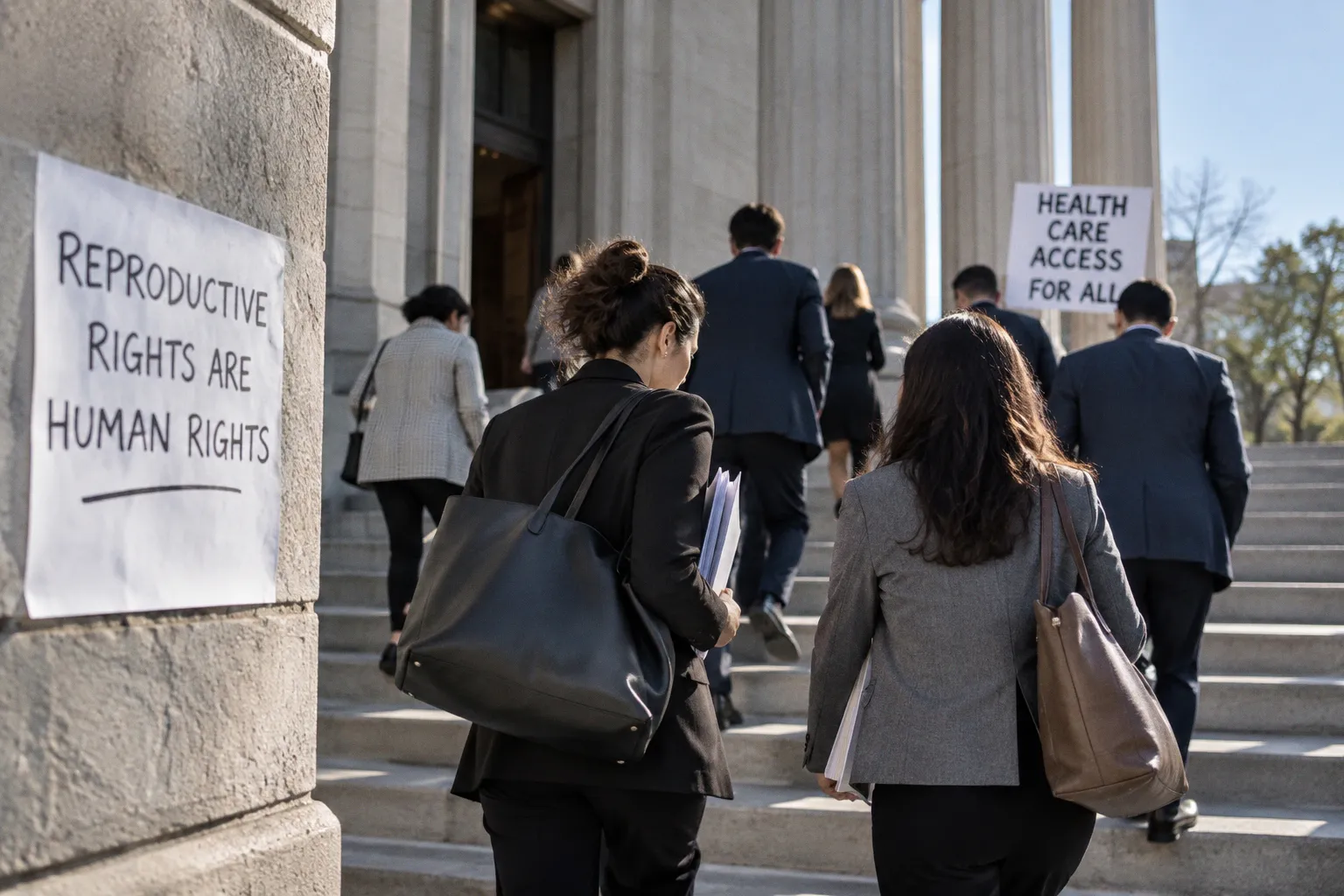
KFF's federal courts tracker on reproductive health litigation got a fresh update on September 9, and for anyone tracking where abortion and contraception access actually stands in court, it is the kind of resource that turns scattered docket alerts into a navigable map. The tracker organizes active cases across seven categories: Pregnancy and Work, Emergency Care, Family Planning, Privacy, Medication Abortion, Minors Access, and State Abortion Bans. Each tab is a window into a different legal front line, and the ability to filter means patients, clinicians, and advocates can zero in on the slice of litigation that touches their daily reality rather than scrolling through a single undifferentiated wall of cases.
What the tracker covers and why it exists
The database was built to make sense of a legal landscape reshaped by the Supreme Court's Dobbs decision, which returned authority to restrict or protect abortion to the states. Since then, providers and advocates have been challenging state bans in court on grounds that they violate state constitutions or other state laws, and federal questions have multiplied around the intersection of state and federal authority when it affects contraception and abortion access. KFF's tracker consolidates those fights into one place, with the most recent snapshot dated September 9, 2026.
Several of the cases involve coalitions of attorneys general. In one suit, the attorneys general of twelve original states, joined later by Hawaii, Maine, Maryland, Minnesota, Pennsylvania, and D.C., are challenging federal restrictions. In a counter-suit, attorneys general from Alabama, Arizona, Arkansas, Florida, Kansas, Kentucky, Missouri, Nebraska, Oklahoma, South Carolina, and West Virginia are aligned on the other side. Another piece of litigation involves seventeen states, including Tennessee, Arkansas, Alabama, Florida, Georgia, Idaho, Indiana, Iowa, Kansas, Missouri, Nebraska, North Dakota, Oklahoma, South Carolina, South Dakota, Utah, and West Virginia. A separate footnote notes that Idaho, Iowa, Montana, Nebraska, South Carolina, Texas, and Utah requested to intervene in that lawsuit.
What to watch if you are a patient or a provider
For patients, the most practical value of a tracker like this is not abstract. It tells you which state restrictions are currently tied up in court, and therefore potentially unenforceable, and which have been upheld. Missouri's challenge, for example, targets a cluster of restrictions that together shape how care is delivered: a telemedicine ban for abortion, an in-person counseling requirement, a 72-hour waiting period, a prohibition on advance practice clinicians providing abortion care, and a post-viability restriction limited to physical health emergencies. Anyone counseling a patient across state lines needs to know which of those rules are active, which are paused, and which are being argued.
The Center for Reproductive Rights, meanwhile, published a U.S. Repro Watch roundup dated September 10, 2026, surfacing five federal-level updates worth tracking in tandem. Read together, the KFF tracker and CRR's roundup function as a kind of atlas: one gives you the long docket, the other flags the movements that matter right now.
A practical caveat. The KFF tracker itself notes that Wyoming court dockets are not publicly available online, so updates to cases in that state may lag. Anyone relying on the tracker to confirm the status of a Wyoming case should treat the information as provisional rather than definitive, and cross-check through counsel before making a clinical or travel decision based on it.