Birth control implant vs hormonal IUD: two LARC routes
The birth control implant and the hormonal IUD belong to the same broad category: long-acting reversible contraception, or LARC. Both prevent pregnancy for years, require little day-to-day attention, and have typical-use failure rates below 1%.
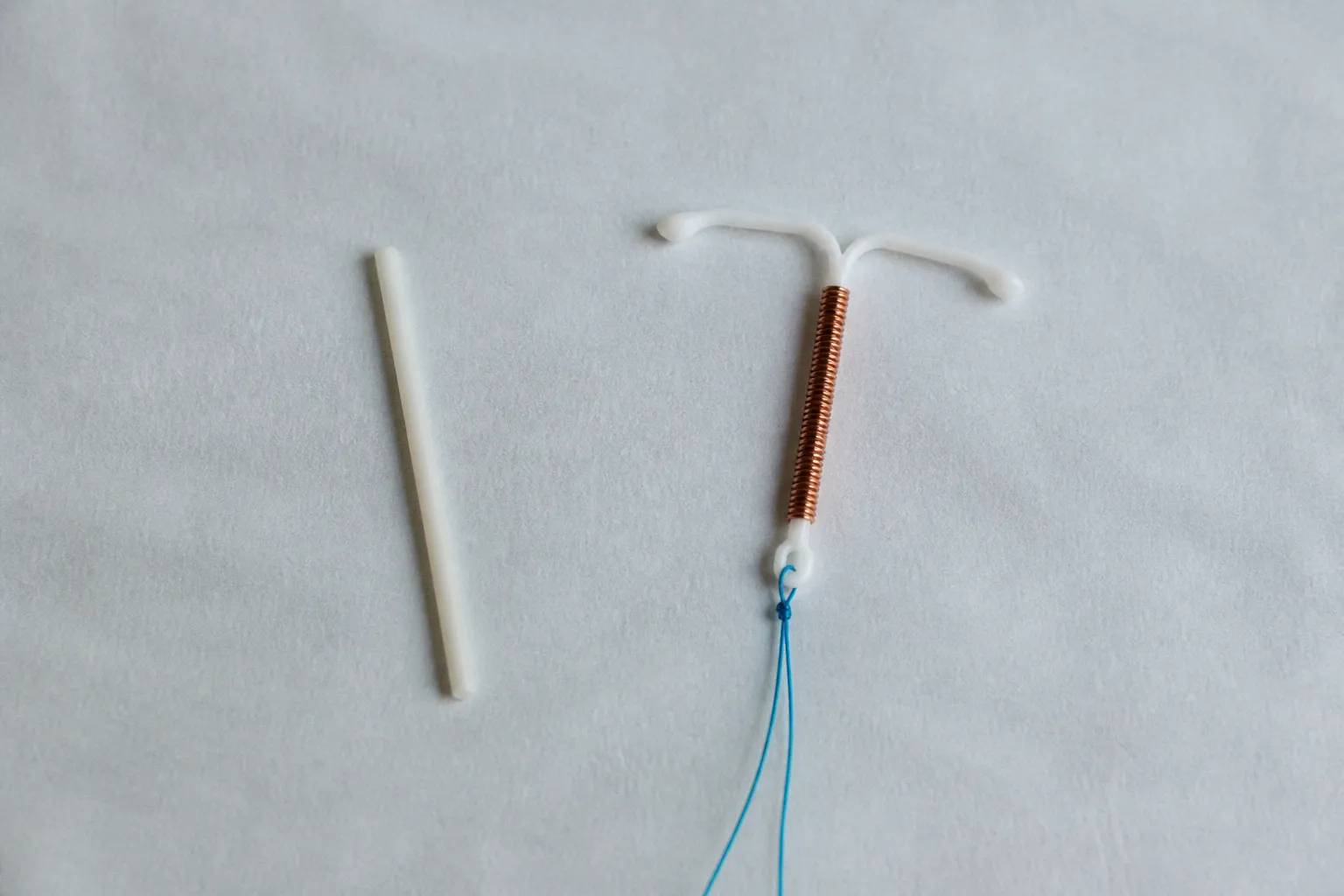
In practical terms, they are among the most effective reversible birth control options available.
The meaningful difference is not effectiveness. It is where the hormone goes, how the method is placed, what happens to bleeding, and which part of the experience feels more acceptable to you. Nexplanon sits under the skin of the upper arm and releases etonogestrel into the bloodstream. A hormonal IUD is placed inside the uterus and releases levonorgestrel primarily in the uterine cavity.
That distinction shapes nearly everything that follows: the procedure, the side-effect pattern, the duration of use, and the reasons someone may prefer one method over the other.
The central difference: systemic implant, local hormonal IUD
Nexplanon is a small, flexible rod inserted beneath the skin of the upper arm. It contains 68 mg of etonogestrel, a progestin, which is released systemically. The hormone circulates through the bloodstream and prevents pregnancy primarily by suppressing ovulation. It also changes cervical mucus, making it harder for sperm to pass through.
Hormonal IUDs use levonorgestrel and work mainly inside the uterus. The hormone thickens cervical mucus and changes the uterine environment. Ovulation may continue for some users, particularly with lower-dose devices, although the exact hormonal effect varies by product and individual.
“Local” does not mean that a hormonal IUD has no effects outside the uterus. Levonorgestrel can still enter the bloodstream, but systemic exposure is generally lower than with an arm implant. That difference may matter to someone who has previously experienced hormone-related effects, although it does not guarantee that a hormonal IUD will be symptom-free.
The main products differ in size, hormone dose, and approved duration. Mirena contains 52 mg of levonorgestrel; Kyleena contains 19.5 mg. Liletta and Skyla are also hormonal IUDs, but the specific device available to you will depend on local approval, supply, and the clinician or service providing it.
What both methods have in common
Both the implant and hormonal IUD:
- are reversible and can be removed when pregnancy is desired;
- provide continuous contraception without taking a pill every day;
- have typical-use failure rates of roughly 0.1% to 0.4%;
- contain progestin rather than estrogen;
- can be suitable options for many people who should avoid estrogen-containing contraception;
- do not protect against sexually transmitted infections, including HIV.
That last point is not a technical footnote. If STI protection is part of your needs, condoms or internal condoms remain relevant even when pregnancy prevention is handled by a LARC.
Duration and effectiveness: the practical gap is smaller than the marketing gap
When people compare Nexplanon with a hormonal IUD, effectiveness is often treated as the deciding factor. It usually should not be. Both methods prevent pregnancy more reliably than user-dependent methods because there is no daily pill to forget, no weekly patch to replace, and no monthly appointment that determines whether protection continues.
The implant is approved for up to three years of continuous pregnancy prevention. Hormonal IUDs provide protection for between three and eight years, depending on the brand. For example, Kyleena is approved for up to five years, while Mirena is approved for up to eight years. Approval periods can change by jurisdiction and product labeling, so the device actually offered matters more than the generic phrase hormonal IUD.
| Parameter | Birth control implant | Hormonal IUD |
|---|---|---|
| Common example | Nexplanon | Mirena, Kyleena, Liletta, Skyla |
| Hormone | Etonogestrel | Levonorgestrel |
| Hormone delivery | Systemic, from the upper arm | Primarily local, from the uterus |
| Placement | Under the skin of the upper arm | Inside the uterus during a pelvic examination |
| Approved duration | Up to 3 years for Nexplanon | About 3 to 8 years, depending on brand |
| Typical-use failure rate | About 0.1% to 0.4% | About 0.1% to 0.4% |
| Daily action required | None | None |
| STI protection | No | No |
| Most characteristic concern | Unpredictable bleeding | Changes in bleeding and the insertion experience |
For someone who wants the longest possible period without replacement, a hormonal IUD may offer a longer approved lifespan. For someone who wants a method that can be removed from the arm rather than placed through the cervix, the shorter duration of Nexplanon may be a reasonable trade-off.
The best choice is rarely the method with the longest number on the label. A device that you are comfortable keeping in place is more useful than one that technically lasts longer but feels unacceptable from the start.
The implant and hormonal IUD are not a contest between “more effective” and “less effective.” The real choice is how you want the method to fit into your body and your life.
Insertion: two procedures, two very different experiences
The implant is inserted in a clinician’s office under the skin of the upper arm. The area is numbed with local anesthetic, and the rod is placed through a small insertion device. The procedure does not involve a pelvic examination or entry into the uterus.
Afterward, bruising, tenderness, or soreness in the arm can occur. The implant can usually be felt under the skin, which is useful for confirming its position. Removal also takes place through the arm, generally using local anesthetic and a small incision.
The hormonal IUD is inserted through the vagina and cervix into the uterus during a pelvic examination. The clinician measures or assesses the uterine cavity and places the device so that it sits inside the uterus. The process is brief, but the sensation can range from manageable cramping to significant pain. There is no single insertion experience that applies to everyone, and pain cannot be predicted reliably from the device name alone.
The difference is therefore not simply arm versus uterus. It is also:
- whether a pelvic examination feels acceptable or difficult;
- whether you have a history of painful cervical procedures or pelvic examinations;
- whether you prefer visible or palpable placement under the skin;
- how you feel about having strings extending through the cervix into the vagina;
- what pain-control options the clinic routinely offers;
- whether you need same-day placement, removal, or both.
Pain management deserves a direct conversation rather than vague reassurance. Ask what the clinic offers before the appointment, including local anesthetic, options for managing cramping, and what will happen if insertion becomes too painful to continue. The factual record cannot predict an individual pain level, and neither can a generic promise that the procedure will be easy.
Access can also decide the question before medical preference enters it. A clinic may offer IUD insertion but not implants, or have a particular brand available while another is back-ordered. Insurance rules, referral requirements, age policies, and the availability of trained providers vary by setting. A method that requires several appointments may be less practical than one that can be inserted during an existing visit.
Removal and reversibility
Both methods are reversible. Once removed, neither is intended to permanently affect fertility. The timing of return to fertility can vary from person to person, but there is no need to complete the full approved duration if your priorities change.
Removal is not a failure of the method. People stop LARCs because of bleeding, side effects, a change in relationship or pregnancy plans, relocation, cost, or simply because they no longer want the device. Contraceptive autonomy includes the right to change your mind.
Bleeding patterns: the issue most likely to determine satisfaction
The question people often ask is whether the implant or hormonal IUD has fewer side effects. That framing is too broad to be useful. The most important difference for many users is the bleeding pattern.
With Nexplanon, irregular or unpredictable bleeding is the most common side effect and the primary reason for premature discontinuation. Bleeding may be infrequent, prolonged, frequent, intermittent, or difficult to anticipate. Some users have very little bleeding; others find the unpredictability disruptive enough to seek removal.
The problem is not necessarily the total amount of blood lost. An occasional light bleed can be tolerable while repeated spotting becomes exhausting. Conversely, someone who strongly prefers not to menstruate may find an irregular pattern more troubling than a predictable monthly period.
Hormonal IUDs can also cause irregular bleeding, particularly after insertion. Over time, bleeding often becomes lighter for many users. Some eventually have very light periods or no bleeding, while others continue to have spotting or regular bleeding. The pattern is not fully predictable in advance, and the specific device can matter.
A useful way to compare the two is to focus on tolerance rather than promises:
If bleeding predictability is your priority
Neither method guarantees a regular cycle. The implant is more strongly associated with unpredictable bleeding, so someone who needs a reliable calendar may find it frustrating. A hormonal IUD may produce a more favorable long-term bleeding pattern, especially with a higher-dose device, but it can still involve irregular bleeding during the early months and does not guarantee amenorrhea.
If lighter periods are your priority
Hormonal IUDs are often attractive because their local action can reduce menstrual bleeding for many users. They are not prescribed solely as a bleeding treatment in every context, and individual results vary, but the potential for lighter periods is an important reason people choose them.
If any genital bleeding feels unacceptable
This needs an unusually candid discussion. A method that is highly effective can still be the wrong method if its bleeding pattern interferes with work, sex, religious practice, sports, mental health, or the simple ability to plan a week. Ask what the clinician considers a concerning pattern and what treatment or removal options would be available if bleeding becomes difficult.
Side effects beyond bleeding
Both methods are progestin-only, so they share some possible hormonal effects. Headache, breast tenderness, acne, mood changes, and other symptoms may occur, but the presence and intensity of these effects vary substantially between individuals. A symptom that appeared with one progestin method may not recur in exactly the same way with another, but past experience is still useful information to bring to the consultation.
The implant’s systemic delivery makes it more likely that the entire body is exposed to a relatively consistent circulating hormone level. That does not mean every user will experience systemic symptoms, nor does it prove that every symptom is caused by the implant. It does mean the route is different from an IUD that releases levonorgestrel primarily within the uterus.
Hormonal IUDs tend to have lower systemic hormone exposure, but they are not hormone-free. Someone who experienced mood or skin changes with a previous hormonal method may still notice changes with an IUD. The lower systemic exposure may be an advantage, not a guarantee.
Weight concerns require particular care. Weight gain is often attributed to the implant as a settled physiological effect, but the evidence is mixed. It is more accurate to discuss any changes in weight in the context of baseline weight, age, medications, stress, sleep, health conditions, and ordinary changes over time rather than treating the implant as an automatic explanation.
The IUD has a different set of procedure-related considerations. Cramping and spotting after insertion are common experiences, while rare complications can include expulsion or uterine perforation. The likelihood and management of these events depend on clinical circumstances. They should be explained during consent without turning a routine option into a frightening one.
The implant also has placement-related risks, including bruising, soreness, migration concerns, or difficulty removing a rod that was placed too deeply. A trained provider should confirm that the device is inserted correctly and explain what to do if it cannot be felt or if the arm becomes increasingly painful, swollen, or red.
Safety and health history: why the progestin-only category matters
The implant and hormonal IUD are both progestin-only LARCs. According to clinical guidance, these methods can be safe options for people with a history of venous thromboembolism or a risk of blood clots. That does not mean every person with a clotting history can automatically use either method without evaluation. The details matter: the type and timing of the clot, current treatment, other medical conditions, medications, and the specific method.
The broader point is that a history of blood clots does not automatically eliminate all highly effective contraception. Estrogen-containing methods may raise different concerns, while progestin-only options are assessed separately.
A clinician may also need to discuss:
- unexplained vaginal bleeding before insertion;
- current or recent pelvic infection;
- uterine anatomy that could interfere with IUD placement;
- breast cancer history and other hormone-sensitive conditions;
- medications that may affect contraceptive reliability;
- whether an arm implant can be safely placed and removed;
- the possibility of pregnancy at the time of insertion.
The assessment should be method-specific. “Hormonal birth control” is not one uniform category, and the difference between systemic etonogestrel and primarily local levonorgestrel matters.
Neither method protects against STIs or HIV. If there is any possibility of exposure, dual protection—using condoms alongside the implant or hormonal IUD—may be the more complete strategy. LARC handles pregnancy prevention; it does not replace testing, vaccination, barrier protection, or communication about sexual health.
Nexplanon vs hormonal IUD: which route fits which priorities?
The following is not a ranking. It is a way to make the decision more concrete.
The implant may make more sense if you:
1. Want to avoid a pelvic examination and uterine insertion.
The implant is placed in the upper arm, which may feel more acceptable if cervical procedures are painful, triggering, or simply not something you want.
2. Prefer a method you can feel under the skin.
Some people find the palpable rod reassuring because its presence is easy to confirm. Others dislike the idea of a visible or touchable device.
3. Want highly effective contraception without an IUD in the uterus.
The implant provides the same broad LARC advantage—continuous protection with no daily action—through a different placement route.
4. Are comfortable with the possibility of unpredictable bleeding.
This is the major trade-off. If irregular bleeding would be especially disruptive, the implant deserves a more cautious discussion.
5. Need a progestin-only option in the context of clot risk.
Individual eligibility still requires clinical assessment, but the implant belongs to a contraceptive category that can be appropriate for many people with VTE histories or clot risk.
A hormonal IUD may make more sense if you:
1. Want the possibility of lighter periods over time.
Hormonal IUDs can reduce bleeding for many users, although early spotting and individual variation are common.
2. Prefer lower systemic hormone exposure.
The levonorgestrel effect is concentrated primarily in the uterus, even though some hormone enters the bloodstream.
3. Want protection that may last longer than three years.
Depending on the brand, a hormonal IUD can provide three to eight years of contraception.
4. Are comfortable with pelvic insertion and a device inside the uterus.
The insertion experience is a central part of the decision, not an administrative detail to discuss at the end.
5. Want a method that can be checked by feeling its strings.
Strings can help confirm that the IUD remains in place, although changes in strings or new pain and bleeding should be evaluated rather than self-diagnosed.
There is no universal winner in the implant-versus-IUD comparison. A person who considers irregular bleeding unacceptable may reasonably choose an IUD even if the insertion sounds more intimidating. Someone who wants to avoid uterine placement may choose Nexplanon despite knowing that bleeding could be unpredictable. Both are rational decisions when they reflect the person’s priorities.
The best LARC is not the one that looks strongest on a comparison chart. It is the one whose compromises you can live with.
A more useful conversation with a clinician
Appointments often become less helpful when the discussion starts with a demand for the “best” method. The better question is which disadvantages you are least willing to accept.
Before choosing between a birth control implant and hormonal IUD, consider:
- Is irregular bleeding a minor inconvenience or a reason you would stop the method?
- Do you want to avoid a pelvic examination?
- Would a device in the upper arm feel reassuring or intrusive?
- Are lighter periods important to you?
- Have you had difficult experiences with hormonal contraception?
- Do you have a history of blood clots, unexplained bleeding, pelvic infection, or breast cancer?
- How long would you ideally like contraception to last without replacement?
- Is the specific brand you want available through your clinic or insurance?
- What pain-control options are offered for insertion?
- What is the plan if you want removal sooner than expected?
- Do you also need STI protection?
It is also reasonable to ask for the actual product name rather than settling for a general label. “Hormonal IUD” covers devices with different hormone amounts, sizes, and approved durations. The phrase “implant” usually refers to Nexplanon in the United States, but access and labeling can vary across countries.
A method should not be presented as permanent simply because it lasts several years. Nor should removal be treated as an inconvenience that a patient must justify. Contraception works best when continuation is voluntary and informed, not when someone is pressured to tolerate a side effect because the method is statistically effective.
The bottom line
In the birth control implant vs hormonal IUD decision, contraceptive effectiveness is nearly a draw: both methods are over 99% effective with typical use. The more revealing questions concern delivery route, bleeding, procedure, duration, and personal comfort.
Nexplanon offers up to three years of protection from a discreet upper-arm implant, but its systemic hormone release and unpredictable bleeding pattern are important trade-offs. Hormonal IUDs place levonorgestrel primarily in the uterus, may provide three to eight years of protection depending on the brand, and may make periods lighter over time—but insertion requires a pelvic procedure and bleeding changes are still possible.
Neither method protects against STIs. Both are reversible. Both can be appropriate for people who need a highly effective progestin-only option, including many patients with a history of venous thromboembolism or risk of blood clots.
The practical route is to choose the experience you are more likely to accept: an arm procedure with a higher chance of irregular bleeding, or a uterine insertion with lower systemic exposure and the possibility of lighter periods. That is not a compromise between good and bad contraception. It is the core of reproductive autonomy: deciding which method fits your body, your plans, and your definition of an acceptable trade-off.