Pharmacist vs telehealth birth control prescriptions
For many people, the hardest part of getting birth control is not choosing a pill, patch, ring, or injection. It is reaching the healthcare system that can prescribe it.
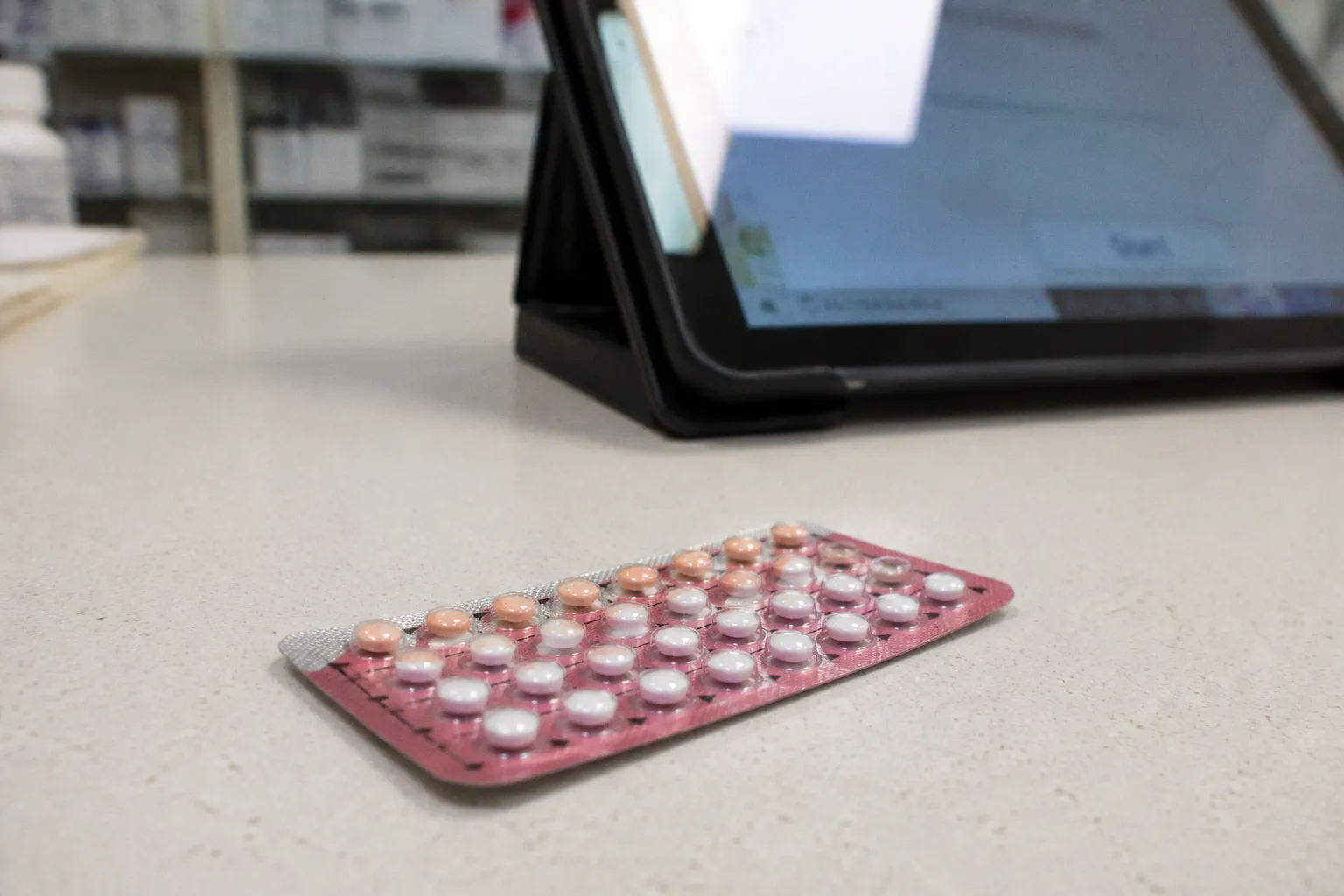
A clinic appointment may require time off work, transportation, childcare, an available provider, and an insurance plan that does not turn a routine prescription into an expensive administrative exercise.
Pharmacist-prescribed birth control and telehealth contraceptive services address that access problem in different ways. Both can help patients obtain self-administered hormonal contraception without a traditional in-person doctor visit. But they are not interchangeable. One is built around direct contact with a pharmacist in a local pharmacy; the other depends on a digital consultation, an online questionnaire, or both. Their eligibility rules, clinical workflows, availability, and relationship to insurance can differ sharply by state and service.
The practical question is not simply which model is more convenient. It is which route is legally available, clinically appropriate, financially workable, and capable of supplying the method a patient actually wants.
The evolution of direct access: pharmacist prescribing versus digital consults
The traditional contraceptive pathway has usually involved a clinician visit, a prescription, and a pharmacy pickup. That model still matters for many patients, particularly those seeking an IUD, implant, complex counseling, or evaluation of symptoms. But it leaves a substantial gap for people who need a straightforward refill or want to start a self-administered method without navigating a full clinic appointment.
Telehealth reproductive services began to close that gap by moving part of the consultation online. Depending on the service, a patient may complete a medical questionnaire, speak with a clinician by video or text, and receive a prescription sent to a selected pharmacy or delivered by mail. The consultation can happen at home and outside conventional office hours, although the exact schedule depends on the provider.
Pharmacist prescribing takes a different route. Instead of connecting the patient to a remote clinician, it gives a pharmacist authority to assess eligibility and prescribe certain contraceptives directly. By 2025, 38 U.S. jurisdictions had enacted laws or regulations authorizing pharmacists to prescribe self-administered hormonal contraceptives, including pills, patches, rings, and injections.
That number does not mean the same service exists in the same form everywhere. State rules may differ on:
- which contraceptive methods pharmacists can prescribe;
- whether a statewide protocol, collaborative agreement, or other authorization is required;
- the age of eligible patients;
- the duration of the initial prescription and refills;
- whether the service is offered by every pharmacy or only participating locations;
- how the consultation is documented and billed.
The pharmacy model is therefore local in more than one sense. The patient may be physically close to a pharmacy, yet the nearest location may not have a pharmacist providing contraceptive consultations, may not stock the preferred method, or may operate under rules that limit the available supply.
Still, the geographic advantage is significant. Approximately 90% of Americans live within five miles of a community pharmacy. For someone who cannot easily reach a reproductive health clinic, that proximity can turn contraceptive access from a half-day project into a short local visit.
Telehealth has its own geographic advantage: it can reach patients in areas with few reproductive health providers, provided the service is licensed and available in the patient’s state. It can also reduce the need to travel to a clinic or pharmacy. But remote care does not eliminate every logistical barrier. Patients may need reliable internet or a smartphone, a private place for a consultation, a way to measure blood pressure, and a pharmacy capable of filling the prescription.
Direct access is not one technology. It is a change in the route between a patient’s need and a usable prescription.
What happens during the clinical screening
Both pharmacist prescribing and telehealth contraception generally rely on standardized eligibility questions. The purpose is to identify medical conditions, medications, symptoms, or other circumstances that could make a particular hormonal method unsafe or require additional evaluation.
The screening may cover a patient’s medical history, smoking status, migraine history, blood pressure concerns, recent pregnancy, postpartum status, medications, and previous experience with hormonal contraception. The exact questionnaire and clinical protocol vary by state and provider, but the underlying principle is similar: a shorter access route still needs a meaningful safety screen.
The most visible difference concerns blood pressure.
Combined hormonal contraceptives contain estrogen and progestin. Starting one of these methods requires a blood pressure measurement. That requirement is not a formality. Elevated blood pressure can change whether an estrogen-containing pill, patch, or ring is appropriate, and it may affect the need for further medical assessment.
A telehealth provider may ask the patient to submit a recent reading, obtain one at a pharmacy or clinic, or use another process allowed by the service’s protocol. Some patients already have a home blood pressure monitor; others do not. If a reading is unavailable or appears concerning, the remote consultation may not be enough to complete the prescription process.
The pharmacy setting can make blood pressure measurement more immediate, but the same clinical requirement remains. A pharmacist may measure it on site or work with a protocol that requires documented results. The presence of a healthcare professional behind the pharmacy counter does not remove the need to assess contraindications.
Progestin-only options do not require blood pressure screening in the same way. That distinction can matter for patients who have difficulty obtaining a measurement or who may not be good candidates for estrogen-containing contraception. It does not mean that progestin-only contraception is automatically suitable for everyone, nor does it eliminate the need for a medical history.
The key difference is not that one model screens and the other does not. Both use structured screening. The difference is where the screening happens, how much interaction it includes, and what happens when the answers do not fit a simple prescribing pathway.
Pharmacist consultation
A pharmacist consultation can offer immediate, face-to-face clarification. A patient can explain that a previous pill caused troublesome bleeding, ask how to use a patch, or discuss whether a prescription is covered at that pharmacy. The pharmacist can also identify a medication interaction or recognize when the request falls outside the scope of the protocol.
However, the service is not the same as a comprehensive contraceptive appointment. Pharmacist authority generally covers self-administered hormonal methods: pills, patches, rings, and injections. Pharmacists cannot provide long-acting reversible contraceptives such as IUDs or implants through this prescribing pathway.
Availability can also be uneven. A state may authorize pharmacist prescribing while individual pharmacies offer it only during certain hours, require an appointment, or decline to participate. A patient may need to call ahead rather than assume that any nearby pharmacy can provide the service.
Telehealth consultation
Telehealth is often more flexible for patients who prefer answering questions privately, cannot get to a clinic, or live far from a participating pharmacy. The process may be synchronous, with a video or telephone consultation, or asynchronous, with a questionnaire reviewed by a clinician.
That flexibility comes with a different set of dependencies. The provider must be permitted to serve patients in the relevant state. The patient must be able to complete the screening and provide any required information, including blood pressure data for combined hormonal contraception. The prescription must then reach a pharmacy or delivery channel that can dispense it.
Telehealth can be especially useful when a patient needs a refill and already knows which method works for them. It may be less straightforward when the patient has unexplained symptoms, a complicated medical history, uncertainty about which method to choose, or a need for an examination or laboratory testing.
The access route can matter more than the method
When comparing pharmacist prescribed birth control vs telehealth, people often begin with convenience. That is reasonable, but convenience is not a single feature. It is the total effort required from the first request to the moment the patient has medication in hand.
A telehealth service may avoid travel but add a digital intake process, a consultation fee, an online payment step, or a delay while the prescription is reviewed. A pharmacy consultation may be geographically close but unavailable at the time the patient needs it, or the pharmacy may not have the prescribed product in stock.
Insurance adds another layer. Contraceptive coverage rules may apply differently to the clinical consultation, the prescription itself, the dispensing fee, and the method selected. A service that advertises a low-cost online consultation may still send a prescription to a pharmacy where the medication has a different out-of-pocket price. Conversely, a pharmacist consultation may be convenient but not reimbursed by a particular insurance plan.
There is no uniform nationwide price comparison between telehealth consultation fees and pharmacy consultation fees. Costs vary by state, provider, pharmacy, insurance plan, method, and dispensing arrangement. The financially sensible route is often the one that makes the entire episode affordable, not merely the one with the lower visible consultation charge.
Patients comparing options may find it useful to separate the costs into distinct parts:
| Cost or access point | Pharmacist prescribing | Telehealth prescribing |
|---|---|---|
| Clinical screening | May be conducted by a pharmacist under state rules or protocol | Usually completed through an online questionnaire, video, phone, or asynchronous review |
| Blood pressure for combined methods | May be available at the pharmacy, depending on the location | May require a home reading, pharmacy reading, or other documented measurement |
| Medication dispensing | Usually tied to the participating pharmacy and its inventory | Prescription may be sent to a local pharmacy or fulfilled through delivery |
| Insurance processing | Depends on coverage for the method and any pharmacist service fee | Depends on coverage for the method, consultation, and dispensing arrangement |
| Refills | Governed by state rules, protocol, and the pharmacist’s authorization | Governed by the prescribing clinician, service policy, and state requirements |
| Access to IUDs or implants | Not available through this prescribing pathway | Not supplied through a remote self-administered contraception prescription |
This is where pharmacy access laws birth control become practically important. Legal authorization opens a door, but it does not guarantee that the door is open at every location or for every patient. The law determines what may be prescribed; the pharmacy’s participation, staffing, inventory, and billing practices determine what happens in real life.
Where both models stop: IUDs, implants, and more complex care
The strongest similarity between pharmacist prescribing and telehealth birth control is also their central limitation: these models are designed primarily for self-administered hormonal contraception.
They can support access to pills, patches, rings, and injections where state law and clinical protocols permit. They do not replace the clinical infrastructure required for long-acting reversible contraception. IUD placement requires a trained clinician, equipment, an examination, and a setting prepared to manage the procedure. Implants also require insertion and later removal by a qualified professional.
A patient who begins with an online consultation or pharmacy visit may still need a clinic for:
- an IUD or contraceptive implant;
- evaluation of abnormal bleeding or pelvic pain;
- assessment of possible pregnancy or a recent pregnancy complication;
- treatment of a suspected sexually transmitted infection;
- management of a medical condition that makes routine protocol screening insufficient;
- counseling that involves several contraceptive methods or significant side effects.
This is not a failure of direct-access models. It is a boundary between prescribing a medication that the patient can administer and delivering a procedure or broader clinical assessment.
The problem arises when that boundary is not made clear. A patient may choose telehealth expecting access to every form of birth control, only to discover that the service can prescribe a pill but cannot arrange an IUD promptly. Another patient may visit a pharmacy seeking an implant and learn that the pharmacist’s authority extends only to self-administered methods.
A good access pathway should make the next step visible when the requested method falls outside its scope. That may mean referral to a reproductive health clinic, primary care provider, community health center, or another service able to provide procedures and follow-up. Without that handoff, direct prescribing can become a dead end rather than a bridge.
Privacy, trust, and the patient’s control over the process
The choice between a pharmacist and telehealth provider is also a choice about the setting in which a patient feels able to disclose health information.
A pharmacy offers physical proximity and a recognizable healthcare professional. Some patients prefer being able to ask questions in person and leave with medication the same day, if it is in stock. Others may not want to discuss contraception in a public retail environment, especially if the pharmacy lacks a private consultation area or is busy.
Telehealth can offer privacy at home, but home is not private for everyone. A patient may share living space with a partner, family member, or roommate. Notifications, billing records, shipping labels, and pharmacy messages can also create privacy concerns. Digital convenience should not be confused with automatic confidentiality in every practical circumstance.
The broader reproductive healthcare environment matters as well. Since the June 2022 Dobbs decision, state-level differences in reproductive healthcare access have become more consequential. Contraceptive prescribing rules, clinic availability, insurance policies, and telehealth eligibility are not uniform across the country. A service that works smoothly in one state may have a narrower protocol or no availability in another.
For patients concerned about continuity, the most useful question is what happens after the first prescription. Can the same pharmacy provide refills? Will the telehealth service continue care if the patient changes insurance? Does the prescription cover a sufficient supply under the applicable state rules? Some state laws allow dispensing supplies ranging from three to twelve months in specific circumstances, but the exact allowance depends on the jurisdiction and prescription arrangement.
Continuity is especially important for contraception because a gap of even a short time can undermine the purpose of the method. A patient should not have to repeat an entire intake process every month or discover at the refill stage that the service cannot renew the prescription under the same conditions.
Over-the-counter access changes the comparison—but not for everyone
The U.S. Food and Drug Administration approved Opill for over-the-counter availability in early 2024. That development created another route to a progestin-only oral contraceptive without a prescription. It is significant because it separates access to one contraceptive product from both clinician prescribing and pharmacist prescribing.
But over-the-counter availability does not make all birth control over the counter. It does not provide access to combined pills, patches, rings, injections, IUDs, or implants through the same route. It also does not resolve questions about side effects, method switching, insurance coverage, or the need for evaluation when symptoms or medical history complicate the choice.
For some patients, an over-the-counter option may be the most direct way to start contraception. For others, a pharmacist consultation offers useful interaction and screening in a local setting. Telehealth may be preferable when privacy, distance, or scheduling is the main barrier. These routes can coexist rather than compete.
The practical landscape now has several layers:
1. Over-the-counter access can remove the prescription requirement for a specific product, but it provides the least individualized clinical interaction.
2. Pharmacist prescribing adds professional screening and counseling at a local pharmacy, where authorized and available.
3. Telehealth prescribing can connect a patient to a remote clinician and may offer a wider scheduling range, but depends on digital access and state eligibility.
4. In-person clinical care remains necessary for procedures, complex histories, examinations, and conditions that do not fit a standardized screening protocol.
No single route solves every access problem. The value lies in having more than one door.
The best contraceptive pathway is not the one with the fewest clicks. It is the one that gets the patient to an appropriate method without creating a new barrier at the next step.
Choosing between the two models
The phrase getting birth control without a doctor visit can describe several different experiences. A patient may be trying to avoid a traditional clinic entirely, or simply trying to avoid an unnecessary appointment for a familiar medication. The distinction matters.
A pharmacist visit may be the better fit when the patient wants:
- face-to-face counseling;
- a local blood pressure measurement;
- help understanding a new prescription;
- immediate coordination with a nearby pharmacy;
- a method covered by the jurisdiction’s pharmacist protocol.
Telehealth may be the better fit when the patient needs:
- a consultation without travel;
- access outside standard clinic hours;
- a refill while away from a regular provider;
- a private digital process;
- a prescription sent to a preferred local pharmacy or delivery service.
Neither route should be treated as automatically superior. The decision depends on the patient’s method preference, medical history, privacy needs, ability to obtain a blood pressure reading, insurance arrangement, and location.
Before starting, it is useful to establish a few facts about the service itself:
- Does it serve patients in the relevant state?
- Which methods can it prescribe?
- Is the clinical consultation covered, separately billed, or paid out of pocket?
- How is blood pressure handled for estrogen-containing contraception?
- Where will the prescription be filled?
- What happens if the selected medication is out of stock or not covered?
- How are refills handled?
- Can the service refer the patient onward for an IUD, implant, examination, or other care?
These are not bureaucratic details. They determine whether a seemingly simple prescription remains accessible after the first interaction.
The future of self-administered hormonal contraception
Pharmacist prescribing and telehealth are part of a larger shift toward distributing routine reproductive healthcare through more settings. Pharmacies are already embedded in local communities, while telehealth can cross long distances without asking patients to travel. Over-the-counter approval adds yet another layer for selected products.
The next challenge is making these routes function as a connected system rather than isolated experiments. Authorization without participating pharmacies leaves patients searching. Telehealth without affordable medication leaves the prescription unused. Insurance coverage without a convenient dispensing channel still produces delay. A screening questionnaire without a clear referral pathway can fail patients whose needs are more complex than the protocol allows.
Equitable access will depend on details that are easy to overlook: language access, disability accommodations, privacy, reliable internet, pharmacy staffing, medication inventory, refill duration, and transparent billing. It will also depend on whether patients can move between models without restarting from zero.
The comparison between pharmacist and online birth control prescription services is therefore not a contest between old and new care. Both models can be useful, and both have limits. Pharmacist prescribing brings contraception into a familiar local healthcare setting. Telehealth reduces distance and can make scheduling more flexible. Neither replaces comprehensive reproductive care, and neither guarantees access simply because the law or a platform permits prescribing.
For patients, the most workable route is the one that matches the requested method and delivers continuity—not just a prescription, but a realistic path to refills, follow-up, and a different level of care when needed.